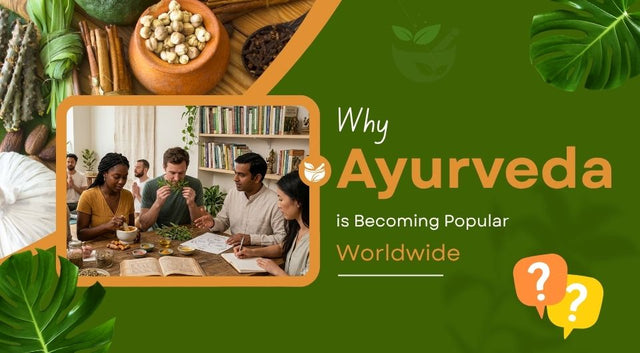
This booklet tells the story of the ancient science that is now gaining a reputation in the modern world.
A great thing is happening all over the world. The term Ayurveda is now becoming more familiar and revered in wellness clinics in Germany, yoga studios in California, integrative hospitals in the United Kingdom and health retreats in Bali. A system of healing that began in India more than 5,000 years ago is enjoying a strong resurgence in popularity around the world, and the factors that have contributed to this resurgence are very much tied to the difficulties of contemporary life.
The world is weary with symptomatic treatment. They look for health systems that address the whole person – body, mind and spirit – not just trying to extinguish a behavior. They are looking for solutions to prevent disease, not only control it. They seek out natural remedies, customised treatment, and time-honored wisdom. All these needs are being answered by Ayurveda and the world is listening.
This article will discuss the reasons behind the popularity of Ayurveda in the world, the driving forces behind this global trend, and the impact it will have on Ayurvedic practitioners, doctors, students, and businesses in India and elsewhere.
1. The World is shifting away from conventional medicine.
It is hard to understand the rise in popularity of Ayurveda unless one comprehends the bigger picture of the attitude shift in healthcare across the world.
People are raising awareness about the barriers of solely pharmaceutical solutions to health in both developed and developing countries. Chronic diseases such as diabetes, hypertension, auto-immune diseases, digestive disorders, mental health problems are epidemic and conventional medicine has come a long way but is not always successful in addressing these issues at the root.
This has resulted in the increasing need for complementary and alternative medicine (CAM) systems that have a markedly different perspective. In all traditional medicines, Ayurveda is the most comprehensive as it encompasses diet, lifestyle, herbal medicine, detoxification therapy, mental wellness and spiritual health in a single coherent system.
The importance of traditional medicine systems such as Ayurveda has been officially acknowledged by the World Health Organization (WHO) and its Traditional Medicine Strategy for 2019-2025 actively promotes the integration of traditional medicine into national healthcare. The recognition by the institutions has given Ayurveda a lot of credibility in the world arena.
2. The Wellness Industry Boom has been driving Ayurveda's expansion in the world.
Today, the world wellness industry is worth more than 5 trillion USD and is rapidly expanding. In this vast marketplace, people craving ancient wisdom traditions are actively searching for personalized, natural, and holistic wellness solutions.
Ayurveda seamlessly complements this wellness terrain. The key principles of Vata, Pitta and Kapha, Prakriti (individual constitution), Dinacharya (daily health routines), seasonal living and the use of natural herbs and therapies are all deeply personalised and preventative approaches to wellbeing, which are very aligned with the modern health-conscious consumers.
In the Ayurvedic product category, the mainstream markets are quickly embracing the products from India:
-
Today, a variety of herbal supplements and adaptogenic herbs such as ashwagandha, shatavari, tulsi, and Brahmi are being marketed in health stores and pharmacies all over Europe, North America, and Australia.
-
The skincare and personal care product market is going Ayurvedic and is gaining popularity in international beauty markets.
-
Wellness tourists are flocking to Kerala and other Ayurvedic centres in India to experience panchakarma detox retreats.
-
From the Ayurvedic principles of food comes the idea of functional food or nutraceuticals, which is being used as a guideline to develop products around the world.
This leap in the wellness market is a momentous commercial opportunity for practitioners, doctors, and businesses based on Ayurveda, that is still in its infancy.
3. COVID-19 has sparked the global interest in Ayurveda.
COVID-19 pandemic became a pivotal moment for the recognition of Ayurveda all over the world. Millions of people sought out traditional medicine systems when there was no quick and easy medical cure for the world's unprecedented health crisis, and they were looking for immune support, respiratory health, and stress relief.
During the pandemic, the Ministry of AYUSH (Ayurveda, Yoga & Naturopathy, Unani, Siddha and Homeopathy) has been actively promoting Ayurvedic procedures for boosting immunity. Combinations of Giloy (Tinospora cordifolia), Ashwagandha, Tulsi and turmeric became hugely popular, not just in India, but in the Indian community around the world and among many people curious about Indian wellness.
The attention Ayurveda garnered in the Indian response to the pandemic in the international media has helped to make the system more familiar to healthcare practitioners and consumers around the world.
During this time, there was also a significant increase in scientific studies on the immune-boosting, antiviral, and stress-relieving properties of Ayurvedic herbs, offering a scientific validation of the wisdom passed down through generations that resonated with the health-conscious world.
4. Scientific Research Is Validating Ayurvedic Knowledge
The rapid global emergence of Ayurveda's practice is one of the most powerful factors that validates its traditional statements with scientific research. In recent decades, there has been skepticism towards traditional medicine within the global scientific community accustomed to the rigor of evidence-based practice.Traditional medicine has long been viewed with suspicion by global audiences that have grown up in an era of evidence-based medicine. It is gradually being overcome by careful investigation.
There are several areas of study in Ayurveda that are gaining international attention, such as:
-
Adaptogenic Herbs
Ashwagandha (Withania somnifera) has a variety of clinical trials that show its efficacy in lowering cortisol levels, improving stress resilience, enhancing athletic performance and supporting thyroid function. These results have boosted Ashwagandha into being one of the top selling herbal supplements in North America and Europe.
-
Anti-inflammatory Properties
Turmeric (Curcuma longa) and curcumin, its active compound, have been thoroughly investigated for their anti-inflammatory and antioxidant properties. Curcumin studies have been correlated with a variety of potential health benefits that include in the field of neurological health, metabolic syndrome, and arthritis, and published in international peer-reviewed journals.
-
Gut Health
The concept of Agni (digestive fire) and Ama (toxins due to a weak digestive fire) from Ayurveda is highly relevant with contemporary research in the gut microbiome field. Gastroenterologists and integrative medicine doctors around the world are taking a keen interest in the digestive health Ayurvedic herbs and practices.
-
Neuroprotective Herbs
Brahmi (Bacopa monnieri), and Shankhpushpi are being investigated for their neuroprotective, memory enhancing and anxiolytic effects — which are areas of tremendous global interest as a consequence of the increasing incidence of cognitive decline and mental health problems.
This wave of research is not only a confirmation of the Ayurvedic knowledge system but also a pathway to connect with the patients and other doctors and practitioners trained in conventional medicine.
5. The Indian Diaspora is spreading Ayurveda
The international dissemination of Ayurveda has, until now, been largely bolstered by India's large and expanding global diaspora, notably in the U.S., the U.K., Canada, Australia, the Middle East and Southeast Asia.
In India, Ayurveda is not a fad, it's a family tradition for millions abroad. Diaspora communities have become more successful economically and culturally and more visible and proud in their countries of adoption of Ayurvedic practices, products, and practitioners.
This diaspora effect has given rise to:
-
A ready market for Ayurvedic products in the world market.
-
Rising demand for Ayurvedic practitioners and clinics in cities with large Indian populations.Increase in the demand for Ayurvedic practitioners and clinics in the cities where Indians are in large numbers.
-
Cultural bridges for non-Indian populations to discover and explore Ayurveda from their Indian neighbours, colleagues and friends.
-
Launching Ayurvedic brands and businesses in the Western markets with entrepreneurs' energy.
The diaspora element also helps in the sustainability of the spread of Ayurveda around the world, because the knowledge is based on the real cultural context and lived practice.

6. Yoga has naturally become a gateway to Ayurveda with its global success.
Today, yoga is one of the most common forms of wellness practices worldwide, and it is embraced by hundreds of millions of people in every continent of the world. This unique extension of yoga has provided a natural and strong connection to Ayurveda.
Yoga and Ayurveda are sister sciences, both Vedic in origin, both goal-oriented towards the harmonisation of the body, mind and the spirit, and both are so deeply complementary in their approach to health and wellbeing. Many Hindus who practice yoga naturally start investigating the bigger Vedic scheme of health, which includes yoga, and thus, they fall in love with Ayurveda.
The use of Ayurvedic ideas in yoga programs is becoming more common around the world, including recommendations for seasonal food and dietary habits, dosha-based lifestyle choices, and Ayurvedic self-care routines. Tens of millions of yoga practitioners are being introduced to Ayurvedic thinking and are creating an ever-growing audience for Ayurvedic knowledge, products and services.
The yoga community is one of the most receptive and interested audiences in the world for the Ayurvedic practitioner and educator.
7. An Ayurveda approach is personalised, and this personalisation resonates with the values of modern healthcare.
Personalisation, Precision medicine, Nutrigenomics, individualised treatment protocols, are all a part of modern medicine's evolution. Personally, it is interesting to note that the entire basis of Ayurveda is personalisation.
The concept of Prakriti in Ayurveda, which refers to the unique constitutional type of every human being based on the balance of Vata, Pitta and Kapha dosha, makes Ayurvedic treatment inherently personalised. Different Ayurvedic recommendations may be given to two persons who have the same symptom which are based on their constitution, present imbalance (vikriti), age, season and geographic location.
This personalized strategy readily connects with the contemporary health-issue cognizant purchaser. They are unhappy with blanket-type medical advice and are attracted to systems that treat them as unique persons. The highly personalised approach of ayurveda to health, including diet, lifestyle, herbal medicine and therapeutic interventions based on each person's unique constitution, is both traditional and very contemporary to the values of health.
8. Government of India's Promotion of Ayurveda on the World Stage.
The Government of India has prioritized the propagation of Ayurveda on the global stage, giving institutional momentum to an organic movement which may otherwise be slow.
Some of the government initiatives that have contributed to the recognition of Ayurveda in the world are:
-
Ministry of AYUSH — Ayurveda ministry set up in 2014 with an aim to promote research, standardisation, education and international promotion of Ayurveda.
-
Ayush Health and Wellness Centres — providing primary health care using Ayurvedic principles in the public health system in India, showcasing scalability
-
International Ayurveda Conferences and Summits are designed to unite practitioners, researchers and policy makers from around the world to promote the field.
-
Bilateral Agreements — India has MOUs with many countries for cooperation in the field of Ayurveda, Yoga, and traditional medicine
-
Promote Ayurveda on Dhanvantari Jayanti, known as Ayurveda Day, every year; establish a global platform for the visibility of Ayurveda.
The government schemes give credibility, financial support and a platform to promote grassroots interest in Ayurveda, which greatly enhances the penetration of Ayurveda in the world.
9. The Natural Products Industry is going towards embracing Ayurvedic ingredients.
Additionally, the mainstream natural product industries across the world have started to use Ayurvedic herbs and principles in their product formulation. This larger integration is going to add a lot to the spread of Ayurveda beyond the traditional practitioners and enthusiasts.
Industries using Ayurvedic ingredients are:
-
Ashwagandha, Triphala, Brahmi, Shatavari and Moringa are becoming regular components of international supplement brands, as they are all considered to be nutraceuticals and dietary supplements.
-
There are a number of functional foods and beverages, such as turmeric lattes, ashwagandha protein powders and adaptogenic blends, which are readily available in mainstream supermarket chains.
-
Cosmetics and personal care — Neem, Kumkumadi, Triphala, Bhringraj and many other Ayurvedic botanical extracts have been added to high-end international skin care cosmetics.
-
Aromatherapy and essential oils: Ayurvedic aromatic traditions provide a growing part of the aromatherapy industry
-
Sports nutrition – Adaptogenic Ayurvedic herbs are making their way into the sports nutrition products for athletes.
Thus, Ayurvedic concepts and ingredients are being accessed by hundreds of millions of people around the world who may not have visited an Ayurvedic practitioner, but are benefitting from and gaining familiarity with its wisdom.
10. The Ayurveda's Global Rise and its impact on Practitioners, Students and Businesses
This worldwide wave of interest is a great opportunity and responsibility for all those who are working in this field professionally.
Today, international demand for qualified Ayurvedic doctors and for qualified Ayurvedic practitioners for Ayurvedic consultation, both offline and online, is providing employment opportunities which were unavailable a generation ago. The creation of an online footprint, the development of content that resonates with the global community and the pursuit of international partnerships is more valuable than ever.
Perhaps the most exciting time to be in the Ayurveda profession is now for the students of Ayurveda. With all of this interest, research, support and adoption growing worldwide, there is increasing diversity and an international approach to careers in Ayurveda.
The global wellness market is a huge opportunity for Ayurvedic businesses and product companies. The essentials to leverage this opportunity are the creation of export-ready Ayurvedic products, investment in scientific formulation validation, and the establishment of robust digital marketing strategies.
Conclusion: The global phase of Ayurveda is just getting started.
The growth of Ayurveda is not a short-lived fad, but is being observed globally as a viable alternative medicine system. It's a profound, multi-layered shift that comes from authentic human desire: To experience holistic health, personalized care, natural healing and preventative wisdom, in a time of chronic disease and pharmaceutical fatigue.
Research labs are being discovered that validates ancient herbs, wellness retreats have begun offering Ayurveda to tourists around the world, yoga studios are educating people on dosha theory, and even mainstream supplement brands are incorporating Ashwagandha into their formulations, each year Ayurveda is becoming more sustainable and more widespread in the health culture.
India has been giving this gift to human health for 5000 years and now it's making its debut on the international stage. The call is for all those who are dedicated to the practice of Ayurveda, both practitioners and doctors, students and businesses to come lend their voice to this stunning resurgence, share the knowledge with confidence.
We are proud to be part of the growth of Ayurveda and bring authentic Ayurvedic knowledge, products and expertise to the communities and markets that need it, at Varah Healthcare.
Read the frequently asked questions (FAQs) for more information.
Q: Why is Ayurveda gaining popularity outside India?
A: Ayurveda is becoming popular around the world because it has a holistic, individual and preventive approach to health that conventional medicine lacks. Not only is there a big increase in global interest due to the rise of the wellness industry, but also because scientific research has now confirmed the efficacy of Ayurvedic herbs, yoga has spread globally as a way to stay fit, and the COVID-19 pandemic has increased the focus on immunity and natural health.
Q: Is Ayurveda scientifically validated?
A: Many of the principles and herbal formulas of Ayurveda are supported by a large volume of peer-reviewed research. Ashwagandha, Tulsi, Brahmi and Turmeric are some of the herbs that have been studied extensively in clinical trials with promising results for stress, immunity, inflammation and cognition. Research on the basis of Ayurveda is rapidly growing around the world.
Q: What is the global market size for Ayurvedic products?
A: Demand for herbal supplements, Ayurvedic skin-care products, nutraceuticals and wellness services in North America, Europe, Asia and elsewhere is driving the global Ayurvedic products market to tens of billions of US dollars over the next few years.
Q: Can Ayurvedic practitioners work internationally?
A: Yes, as long as Ayurvedic practitioners have the proper certification and training and depending on the country, there may be extra requirements as well; in many countries, Ayurvedic practitioners can find work in integrative medicine clinics, wellness centres, yoga studios, and private practice, especially in countries with big Indian expatriate communities and wellness cultures.
Q: How can someone start learning Ayurveda?
A: Ayurveda can be learned from the accredited Institutions in India which are recognized by Central Council of Indian Medicine (CCIM) and also from the international Ayurvedic educational institutions. The essential texts, the concept of the doshas, and reaching an experienced practitioner are great first steps.